FLUX 3 Video with Audio: Native Sound, Dialogue, and Event Sync

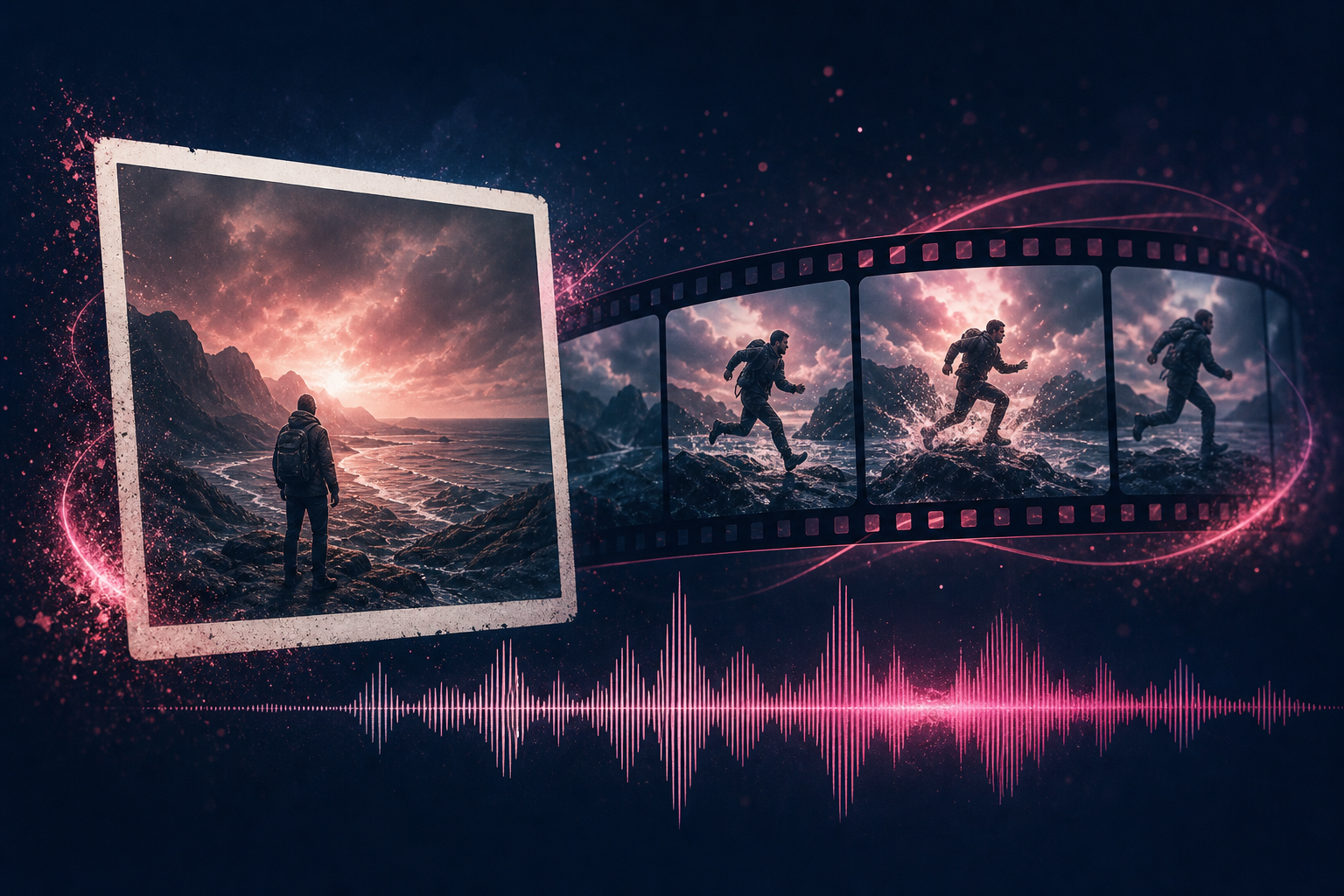
Film strip beside an audio waveform representing video generated with native sound
Most AI video tools still treat sound as a second app. You generate the picture, then hunt for music, ADR, or Foley. FLUX 3 Video is pitched the other way: native audio comes with the clip, including multilingual dialogue and sounds tied to what happens on screen.
Note: FLUX 3 Video with optional native audio is live on TheFluxTrain. Cost depends on duration and resolution, not an extra audio surcharge. See the Rate Card.
Quick answer: FLUX 3 Video can generate up to 20 seconds with native audio in one pass. BFL highlights multilingual dialogue and event-connected sounds. Run it on TheFluxTrain from text, image, or the FLUX 3 model page.
Deep dive siblings: multilingual dialogue · text-to-video · release status
Why native audio matters
When picture and sound are separate models, you get two failure modes. Lips move and the words arrive late. Or an impact looks heavy and the sound is soft or early.
Back when I was scripting After Effects libraries for client work, sound was always a separate pass. You locked picture first, then someone else filled the track. Training across image, video, and audio is BFL's bet that one model can keep those signals closer together. A ball that looks heavy should sound heavy when it hits.
That does not mean every early-access clip will be broadcast-ready. It means audio is part of the generation contract, not an afterthought.
What kinds of sound does FLUX 3 claim?
From the announcement:
- Multilingual dialogue
- Sounds connected to events in the scene
- Audio that can continue when you extend from existing video and audio
Music beds, mix controls, stem exports, and loudness standards are not detailed publicly. Plan on finishing work in a real editor when the quality bar is high.
How should you prompt for sound?
Write audio the way you write camera moves: specific and short.
Example
A delivery driver drops a cardboard box on a concrete stoop. Thud on impact. Distant traffic. He mutters in English that the package is intact. 5 seconds. No music.
Say when you want silence, room tone only, or no score. If you leave audio unspecified, the model may invent more than you want.
How does this change the workflow?
| Old stack | FLUX 3-oriented stack |
|---|---|
| Silent clip → TTS → Foley | Prompt includes dialogue and event sounds |
| Separate lip-sync tool | Native dialogue in-model (verify on real outputs) |
| One language per pipeline | Multilingual dialogue claimed in one model |
You still storyboard. You still cut. You may still replace a line. You just start with fewer blank audio tracks.
What is still unknown?
- Public quality bars for music vs dialogue vs Foley
- How much control you get over mix levels
- How well lip sync holds outside demos
On TheFluxTrain, audio is a checkbox and credits follow duration plus resolution. Try a short clip first.
Frequently asked questions
Does FLUX 3 generate video with sound?
Yes. BFL says native audio is part of FLUX 3 Video output.
Can the audio include speech?
Yes. Multilingual dialogue is listed as a strength.
Can sounds match on-screen events?
That is part of the announced design: sounds connected to events in the scene.
How long can a video-with-audio clip be?
Up to 20 seconds in one pass. See video length.
Is silent output available?
On TheFluxTrain, turn the Audio checkbox off. Native audio is on by default.
Is FLUX 3 video with audio on TheFluxTrain?
Yes. Start from Video from Text or the FLUX 3 model page.
Does native audio replace a sound designer?
No. It reduces empty takes. Finishing, legal music, and mix still matter for client work.