FLUX 3 Image Editing: Announced Capabilities vs a Full Editor

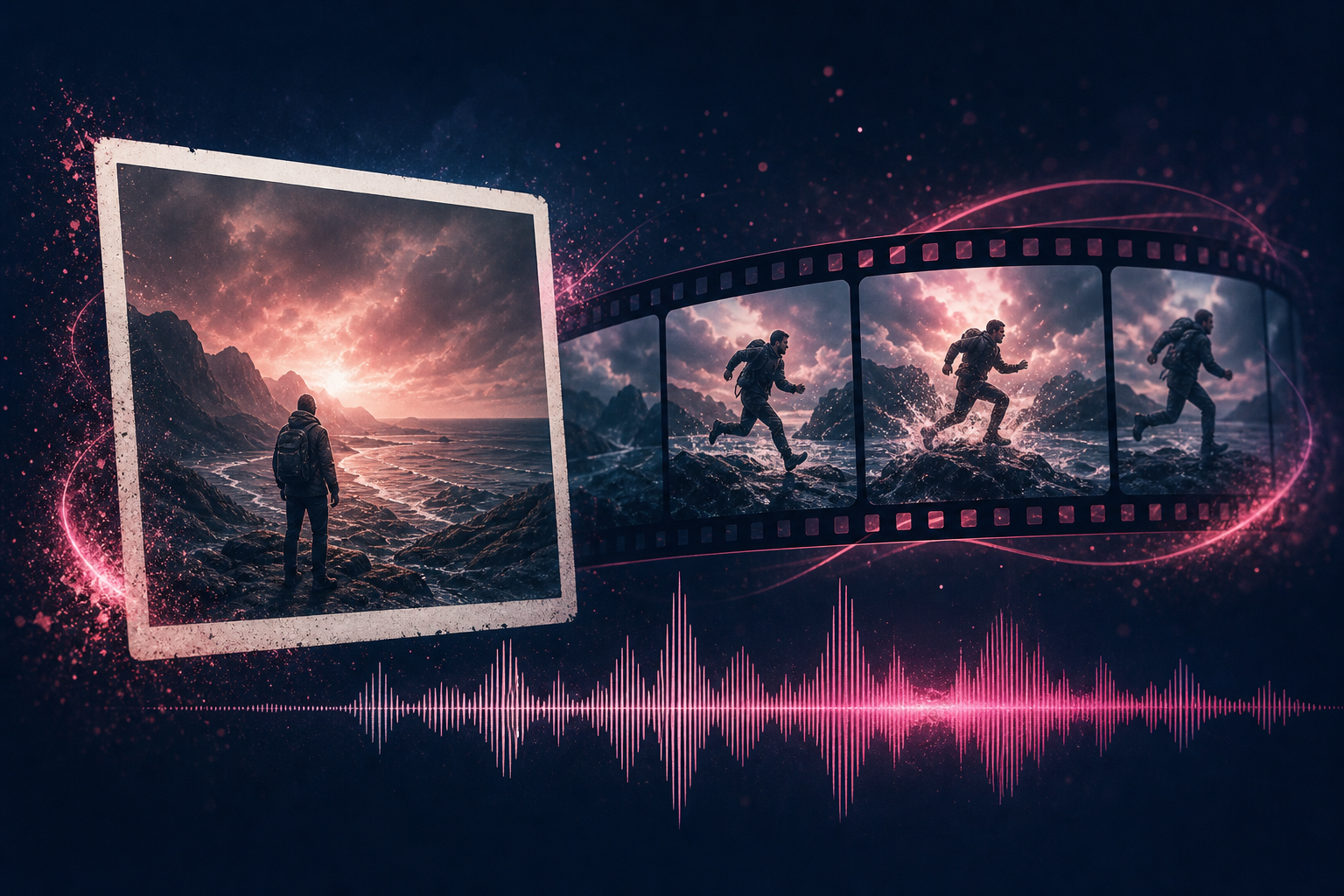
Before-and-after still concept representing generative image editing
Black Forest Labs says FLUX 3 Image covers synthesis and editing. That sentence gets people searching for an AI Photoshop replacement. The honest version is narrower: editing is part of the model design and roadmap, but a generally available, fully specified editing product is not shipping in the first video early-access window.
Note: Image early access was still pending when video access opened in July 2026. TheFluxTrain has FLUX 3 Video live. FLUX 3 Image editing is not on the platform yet.
Quick answer: FLUX 3 Image includes announced editing alongside generation. BFL has not published a full control list, public hands-on results, or pricing for those edits. Interactive image editing is also named as a longer-term direction. For video on TheFluxTrain, use the FLUX 3 model page.
See also: image generation · text rendering · pillar release guide.
What “editing” likely means here
Until docs land, map announced language to familiar jobs:
- Change a region or attribute while keeping the rest
- Restyle a still
- Fix text or layout elements if typography holds up
- Prepare cleaner start frames for image-to-video
Do not assume layers, blend modes, or nondestructive histories unless BFL ships them.
Is FLUX 3 an image editor?
Parts of FLUX 3 fit normal editing tasks. Calling it a complete editor today oversells the release.
BFL has explicitly announced synthesis and editing for images. It has not published:
- A full editing interface
- A list of controls
- Public precision results across repeated local edits
Interactive image and video editing also appear in the broader future alongside simulation and computer use. That is research direction, not a ship checklist.
How image editing ties to video editing
On the video side, reference-based generation, continuation, keyframes, and planned API editing access cover motion. On the image side, still editing is the quiet prerequisite for good motion: cleaner hands, fixed labels, consistent products.
If you only need clip restyles, start with video-to-video. If you need poster-accurate type or SKU fixes, wait for image editing access and test it hard.
What to test when image early access opens
Run a small battery before you trust client work:
- Local color change with identity locked
- Object remove / replace
- Text change on a poster
- Same edit repeated three times for consistency
- Export that still into image-to-video
Write down failures. Early models often win demos and lose production edge cases.
TheFluxTrain angle
FLUX 3 Video is live. FLUX 3 Image editing is not. Use current image tools on the platform, then image-to-video if you need motion. The FLUX 3 model page is the video entry point.
Frequently asked questions
Can FLUX 3 edit images?
Editing is an announced FLUX 3 Image capability. Early access and public controls were still pending after the video launch announcement.
Is there an editing UI?
A complete public editing interface has not been published.
Can it edit video too?
Video-to-video, continuation, and planned API editing cover motion-side edits. See the video-to-video guide.
How precise are local edits?
Unknown until independent tests. Do not promise pixel-perfect production edits from the announcement alone.
Does editing include text changes?
Typography is a claimed generation strength. Edit survival for text needs hands-on proof.
Is FLUX 3 image editing on TheFluxTrain?
No. FLUX 3 Video is live. Image editing is not. Use current image tools, then animate a still if you need motion.
Is FLUX 3 a replacement for Photoshop?
No. Treat it as a generative edit model that may later connect to interactive tools.
Where is the careful “is it an editor?” answer?
In the FLUX 3 release article.