
Vibe Directing Is the Next Vibe Coding

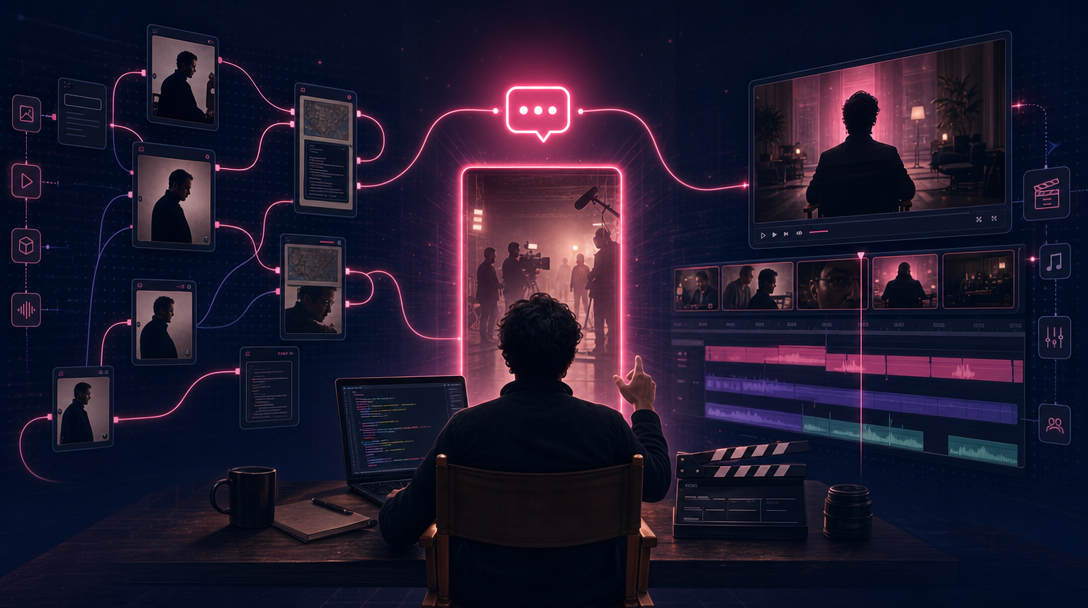
Stylized collage merging code-editor aesthetic with Flow Studio graph and video timeline for vibe directing
You probably remember the first time vibe coding clicked.
You described what you wanted in plain language. The model wrote the code. You ran it, spotted what was off, and said something like "make the error handling less noisy" or "split this into two functions." A few turns later, you had something that worked well enough to ship. You weren't typing every line. You were steering.
A similar moment is starting to show up in video communities. Creators are talking about vibe directing — describing a film's mood, story beats, and visual intent to Claude, then iterating on what comes back the way you'd iterate on a draft of code. One recent thread on r/artificial framed it plainly: this might be the Claude Code moment for AI video creation. Not because a single model suddenly makes cinema, but because the interface to production is changing.
If you've only used standalone text-to-video tools, that can sound like marketing. It isn't, necessarily. It's a shift in what you're actually doing when you "make a video." And the parallel to vibe coding is useful — as long as you don't treat it as a manifesto.
The parallel is real, but it isn't one-to-one
Vibe coding works because software has a forgiving feedback loop. Code compiles or it doesn't. Tests pass or they fail. You can diff two versions in seconds. The "compiler" is precise, fast, and cheap to re-run.
Vibe directing borrows the conversation, not the machinery.
In vibe coding, you express intent; the model translates intent into syntax; the runtime tells you whether you were understood. In vibe directing, you express intent; the model translates intent into a production plan — scenes, shots, character notes, revisions — and a film pipeline tells you whether that plan survived contact with reality.
That last part matters. When the compiler is a film pipeline instead of a language runtime, feedback is slower, messier, and more expensive. A wrong variable name costs you a red squiggle. A wrong character reference can cost you twenty generations and an afternoon.
So yes: the mental model transfers. No: you don't get to pretend continuity, pacing, and performance are as deterministic as type checking.
What changes when the compiler is a pipeline
Think about what you're really asking for when you direct a short film, even a small one.
You want a story that holds together. Characters that look like the same people from shot to shot. Locations that don't morph between cuts. Camera choices that serve the scene instead of random spectacle. An edit where dialogue, music, and rhythm line up. None of that lives in a single prompt. It lives in structure — screenplay beats, reference images, scene folders, shot lists, review passes, replacements.
A text-to-video generator gives you clips. A production pipeline gives you a project.
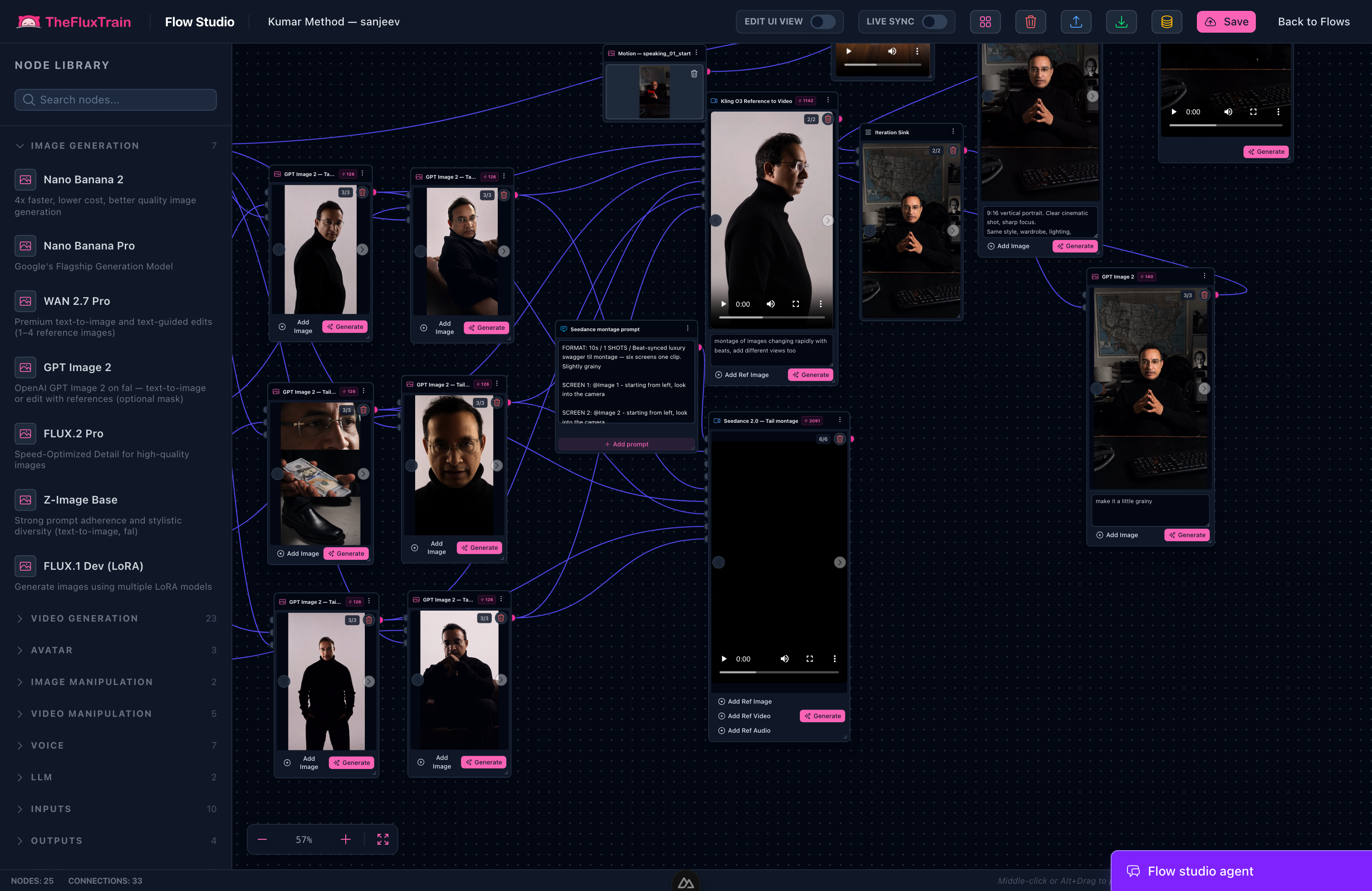
Structure lives in the pipeline—scenes, references, and ordered generations—not in a single prompt textarea.
That distinction is the whole argument. Vibe coding didn't replace software engineering; it changed who could participate and how fast you could explore. Vibe directing won't replace cinematography, editing, or art direction. It changes what you spend your afternoon on. Less time hunting the right magic words for one four-second shot. More time deciding whether the scene actually earns its ending.
If you want the umbrella term for this shift, it is vibe video: you talk to AI about the film you want; a production system assembles the pieces. Vibe directing is the opinionated version of that idea — you are not prompting a generator, you are directing through conversation.
What vibe directing looks like in practice
Here's a grounded version, without the demo-reel gloss.
You start with intent, not prompts. "A tired courier realizes the package she's been carrying is addressed to her younger self." That's a creative brief, not a model invocation.
Claude's job is to interpret that brief the way a good collaborator would. Break it into scenes. Name what each scene needs to accomplish emotionally. Flag where visual continuity will be hard. Suggest when to lock a character sheet before you generate anything. Propose revisions when a storyboard beat doesn't match the screenplay.
Your job is to steer. "The reveal is too early." "She shouldn't speak in scene two." "Cooler palette, same blocking." Same rhythm as vibe coding: describe the delta, not the implementation.
The production system's job is execution. Create or reuse characters. Generate storyboard frames with consistent references. Run image-to-video passes where motion needs help. Track which asset belongs to which scene. Place clips on a timeline. Export something you can actually watch end to end.
None of those steps require you to become a prompt engineer in the traditional sense. They require you to hold creative intent long enough for the pipeline to do repetitive, error-prone work on your behalf. For a practical walkthrough of that division of labor, see Vibe Coding for Video: How Claude Can Direct an Entire Film.
Why this isn't "prompting, but louder"
The easy critique is that vibe directing is just prompt engineering with a film school vocabulary. Sometimes that's fair. If your workflow is still "one paragraph in, one clip out," you're not directing. You're gambling.
Real directing — human or AI-assisted — is decision-making under constraints. Which performance matters more than which lens flare. Which continuity errors are fatal and which you can fix in the edit. Which shots you generate three times and which you kill entirely.
Claude is good at the interpretive layer: turning your vague sense of "more tense" into concrete production notes. It can compare a storyboard to a script and tell you the eyeline is wrong. It can maintain a scene bible so you don't accidentally redesign a jacket in shot six.
It is not a replacement for taste. It won't automatically know that your third act is rushed unless you tell it what feeling you're aiming for. It won't save a boring concept just because the render quality improved.
That's why a balanced take matters. Vibe directing is a workflow upgrade, not a talent substitute. The creators who benefit most are the ones who already know what they like — they just couldn't afford the old pipeline to get there.
Generation is the easy part now
If you've been following AI video for the last two years, you've seen the pattern. Each new model makes prettier motion, sharper textures, longer clips. Then everyone posts the same standalone demos, and the comments ask the same question: "Cool, but how do you make a film?"
The bottleneck moved. Raw generation is becoming a commodity. Orchestration is the hard problem: keeping characters consistent, managing scene dependencies, reviewing intermediates, revising without starting over, turning twelve acceptable shots into one acceptable minute.
That shift—from generation to orchestration—is the structural reason vibe directing shows up right after vibe coding. Coding assistants didn't win because they typed faster. They won because they held context across files, suggested refactors, and let you operate at the level of intent. Film production needs the same elevation — from "generate a clip" to "run a project." Video Creation Is Becoming a Conversation goes deeper on that interface change.
The conversation layer and the execution layer stay separate on purpose. Mix them up and you get pretty fragments. Keep them separate and you get something you can revise.
What you should expect — and what you shouldn't
If you try vibe directing expecting a finished festival short from a single chat, you'll be disappointed. You'll also be misunderstanding the tool.
You should expect faster iteration on structure, cheaper "what if" exploration, and a real home for continuity work — character sheets and scene references living in a project, not scattered across chat logs. You shouldn't expect perfect consistency, zero production literacy, or a bypass around client and brand review. The honest pitch is narrower: vibe directing lets a small team run a structured production conversation with AI, then hand execution to a system built for film-shaped work instead of clip-shaped work.
Claude interprets. The production system executes.
That split is the whole design.
Claude handles language and judgment — briefs, story logic, "make it sadder" translated into shot changes. The production system handles repetition and tooling — models, references, timelines, scene ownership. You don't want either layer doing the other's job.
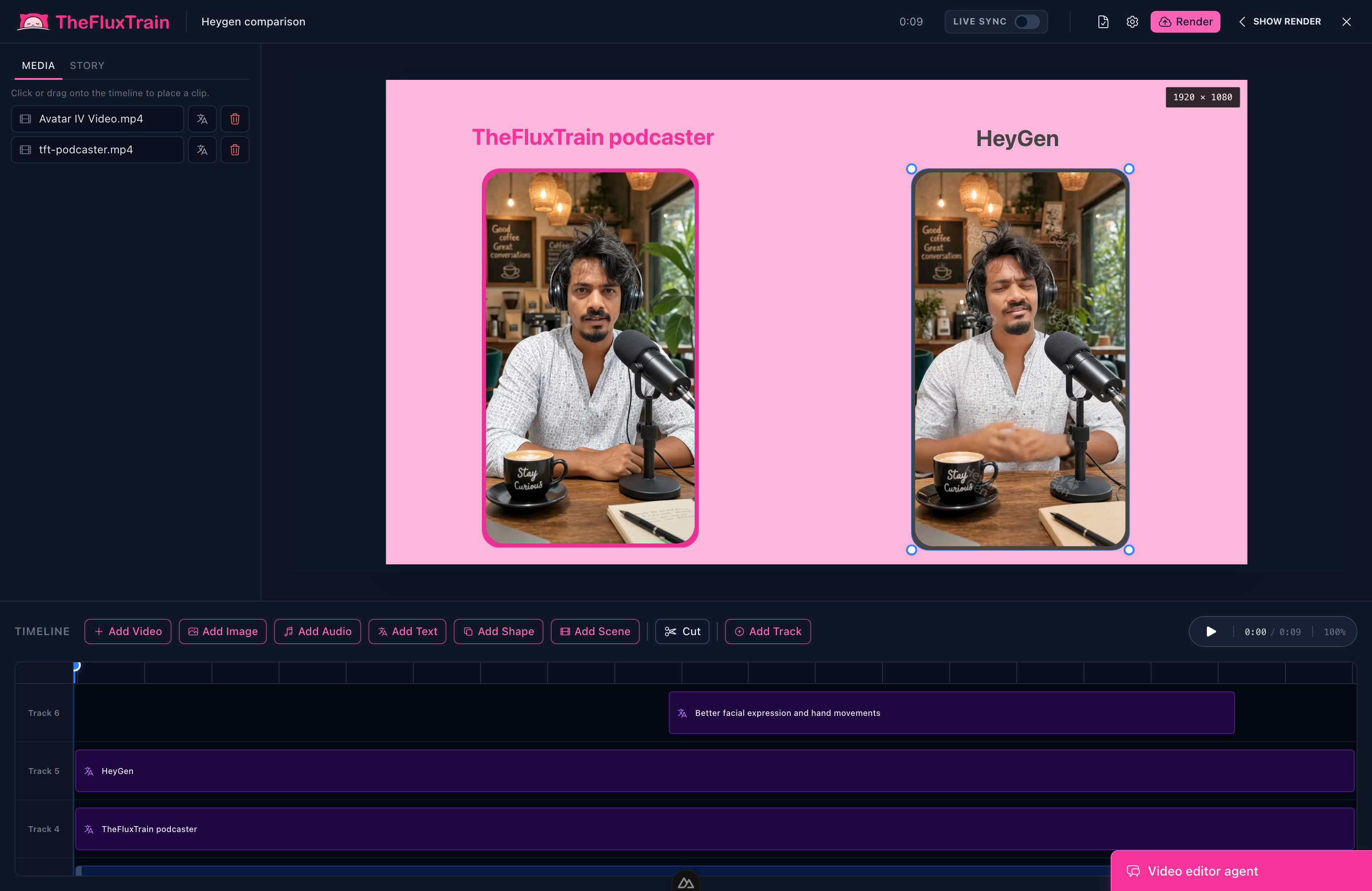
Claude steers intent; the studio layer owns clips, tracks, and export—so revisions stay surgical instead of wiping the project.
Vibe coding taught a generation of builders that you can steer complex output without owning every keystroke. Vibe directing is the same lesson applied to a medium that's been artificially gated by cost and crew size. The Reddit thread caught the mood because people can feel the interface changing before the outputs are perfect.
We're still early. Models will keep improving. But the workflow shift — from generation to orchestration, from prompts to direction — is already visible if you know what to look for.
If you want to explore what that looks like in a real production environment, start at TheFluxTrain. Bring a story idea you care about, not a paragraph of prompt tricks. Describe the vibe. Steer the cuts. Let the pipeline do the tedious part.
That's vibe directing. Not magic. Just a better conversation — with a compiler that finally speaks film.