Video Creation Is Becoming a Conversation

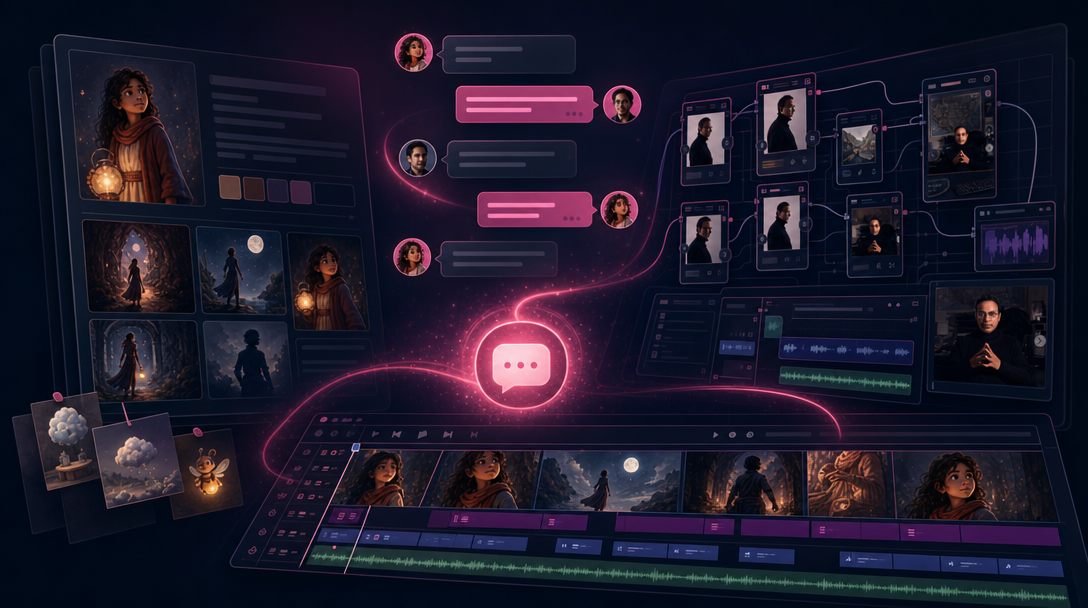
Stylized collage of character bible, Flow Studio pipeline, and timeline as shared memory for conversational video creation
You have seen the pattern before.
You open a text-to-video tool, write something hopeful, and wait. A clip appears. It might be gorgeous. It might be wrong in a way you cannot quite name. You tweak the prompt, generate again, and get a different gorgeous wrong thing. After an hour you have a folder of fragments and no film.
That workflow is not stupid. It was the honest interface when models could barely render motion at all. A single prompt and a generate button were enough to prove the technology worked.
Something else is happening now. Creators who care about story—not just spectacle—are spending less time inventing magic words and more time talking about what should change. "Slower pacing." "She should look scared, not angry." "Keep the coat from the storyboard." "Cut the dialogue in scene four." The unit of work is shifting from one prompt to one turn in an ongoing dialogue.
That is the thesis of this post, and of the vibe video cluster it closes: video creation is becoming a conversation. Not conversation as small talk. Conversation as the primary interface between creative intent and production execution—the same way vibe coding turned software building into a dialogue with an agent instead of a solo typing marathon.
For the umbrella term, see What Is Vibe Video?. For the developer parallel, see Vibe Directing Is the Next Vibe Coding. For Claude holding an entire production in one thread, see Vibe Coding for Video: How Claude Can Direct an Entire Film. This post is the philosophy those pieces orbit.
The generate button was a phase, not a destination
Standalone text-to-video tools trained us to think in samples. You ask for a clip; you receive a lottery ticket. Sometimes the ticket wins—a stunning two seconds you would happily post. Often it loses—the face drifts, the prop changes, the "same" character shows up as someone else in the next export.
Samples work for a mood board loop. They collapse when you need a project—recurring characters, a through-line, an edit where beat three still matches beat seven. Real video work was always iterative; the generate-button era pretended another prompt could replace that.
Conversation restores iteration. You describe, review, and name the delta in collaborator language—"tenser," "later reveal," "match the reference coat"—and the system updates the plan instead of wiping the textarea. The model still renders pixels. What changed is who holds context between passes: not your memory alone, but the project itself.
That is a category shift—from generation to orchestration, from clips to projects. The generate button asked whether the model could make something pretty. Conversation asks whether you can keep making it better without losing what already worked.
What "conversation" means in production
It is easy to misread this as "chatbots will replace filmmakers." That is not the claim.
Conversation here means multi-turn creative direction with memory of decisions already made. You bring intent: genre, length, mood, non-negotiables. An interpretive layer—often Claude in a vibe video workflow—translates that intent into structure: scenes, shot lists, character notes, revision targets. A production system executes the structure: references, graphs, generations, timeline. You stay in language; the stack stays in files, graphs, and clips that persist between turns.
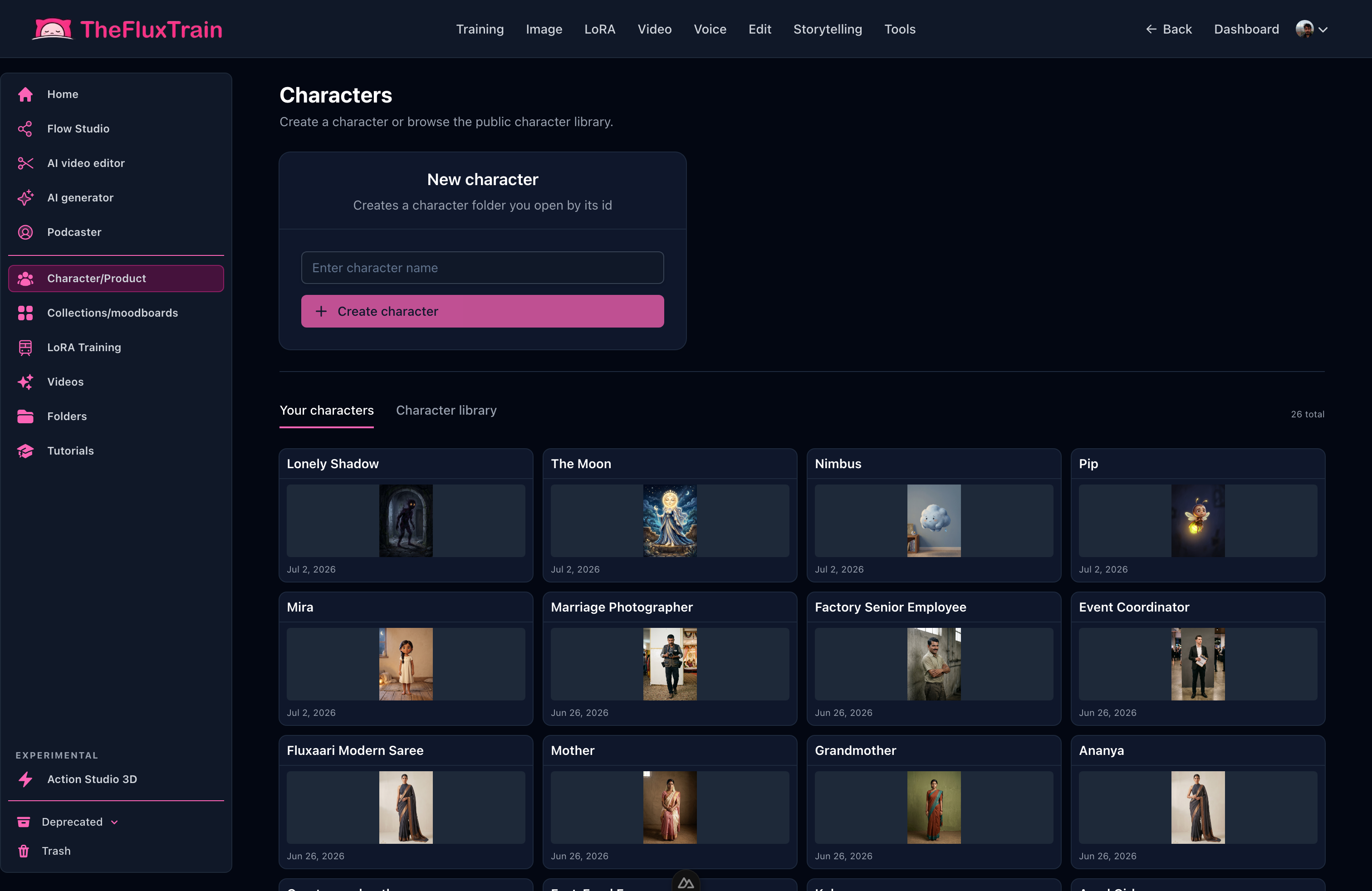
Context lives in the project—locked cast and wardrobe—so each turn revises intent without reinventing who is on screen.
Compare that to the old loop:
| Generate-button workflow | Conversational workflow |
|---|---|
| One prompt → one clip | One turn → updated plan → targeted regen |
| Context lives in your head | Context lives in the project |
| "Try again" means start over | "Fix scene three" means touch scene three |
| Review happens in a downloads folder | Review happens against screenplay and storyboard |
| You are a prompt engineer | You are a director giving notes |
If you have vibe coded, the rhythm is familiar: describe, run, note what failed, patch the plan, rerun the affected pieces. Vibe Directing Is the Next Vibe Coding makes the parallel explicit—the compiler is just slower and priced in credits. Vibe Coding for Video shows the loop on a full film: "Scene two still feels too bright," and only scene two changes.
Intent and execution stay separate on purpose
The most important design choice in conversational video is splitting the layers.
Claude interprets—language, story logic, judgment. "Make it sadder" becomes longer holds, cooler grade, fewer lines. A storyboard panel gets compared to the screenplay; the eyeline error gets named.
The production system executes—character bibles, Flow Studio graphs, scene folders, the edit timeline. Mix the layers and you get pretty fragments. Keep them separate and beat three can fail without erasing beat one.
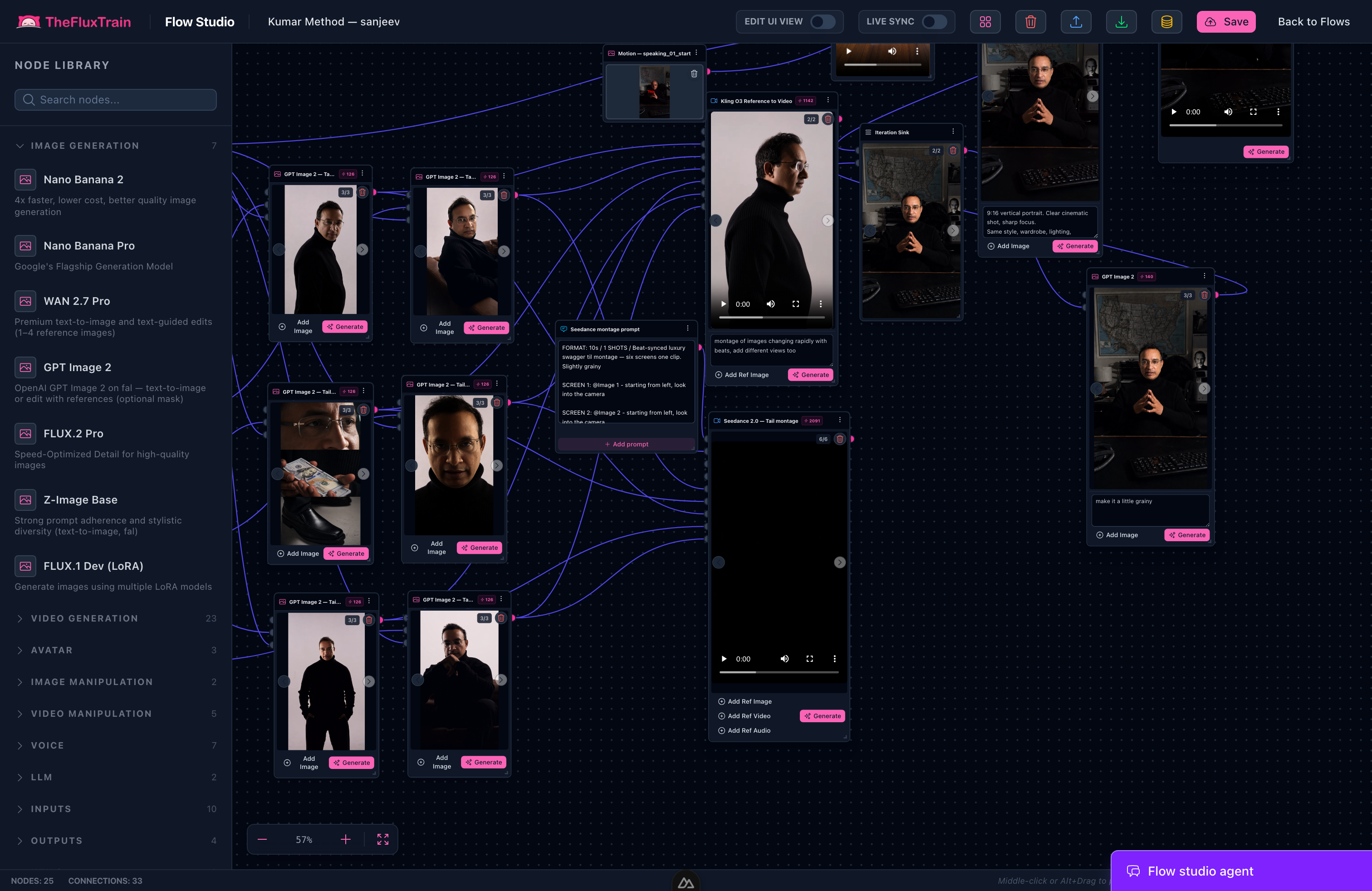
Execution stays in ordered graphs and scene folders—so fixing beat three does not wipe beat one.
That split is the point of What Is Vibe Video?: you manage intent; agents and tools manage execution. Claude directs in the conversation. TheFluxTrain is the studio—persistent characters, ordered pipelines, a timeline where clips become a film.
Notes, not prompts
If you have ever given notes in a screening room, you already speak the right language.
Prompt engineering asks: What magic words make the model behave?
Directing through conversation asks: What should the audience feel, and what must change to get there?
Weak notes—"make it better," "more cinematic"—force guessing. Strong notes name deltas: tension, dialogue density, reveal timing, wardrobe, camera distance. Claude executes well when intent is specific enough to argue with.
You: Two-minute thriller. Woman alone in an inherited house. Rainy evening. She finds an envelope that was not there yesterday. Minimal dialogue. End with something moving in the attic.
Claude: Five scenes. Character sheet and living-room reference before motion. Storyboards first?
You: Yes. Keep it slow.
Claude: Scene two reads too cozy; scene four has dialogue you wanted cut. Revise before we lock?
You: Make it tenser. Cut the dialogue. Add a dramatic reveal.
Claude: Cooler grade in scene two; silence in four; surveillance-photo reveal in five. Regenerating two, four, and five only—character sheet and scenes one and three unchanged.
You never typed negative prompt: cheerful lighting. You directed escalation. The conversation is the changelog. Vibe Coding for Video walks the full version of this thread.
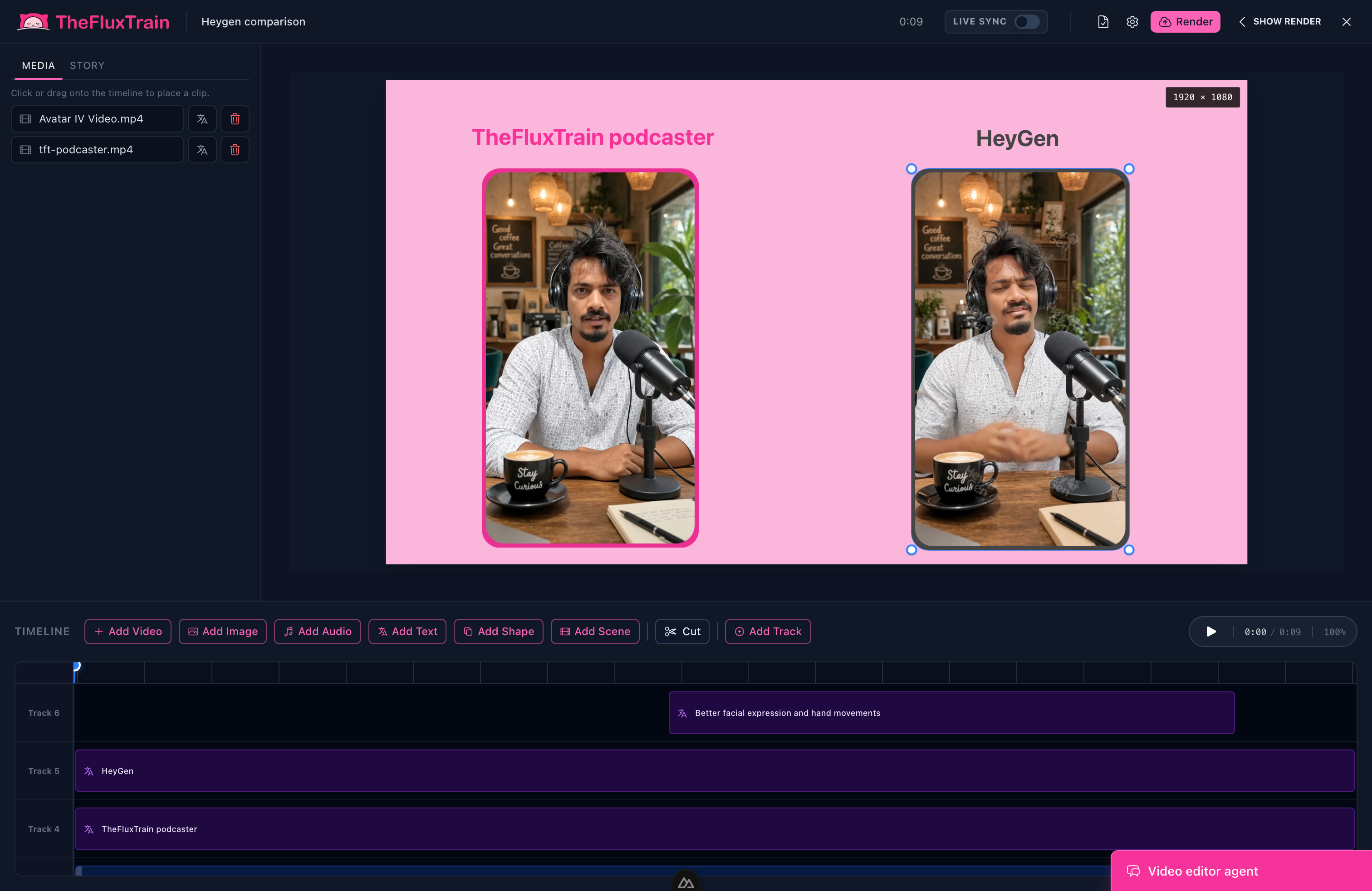
Targeted regenerations land on the timeline—the conversation updates the plan; the project remembers what already worked.
What conversation does not promise
Honesty matters, especially in a pillar post.
Conversation does not mean a finished festival short from one chat. It does not mean perfect consistency, zero production literacy, or a bypass around brand and legal review. Models still struggle with hands, long continuous takes, and subtle performance. Credits still burn on iteration—that is normal, not a sign you are doing it wrong.
What conversation does promise is a better home for work you always had to do: structure before pixels, review before assembly, targeted fixes instead of blanket rerolls. Faster "what if" exploration. Cheaper dailies at the storyboard stage. A project that survives a third-act rewrite because the screenplay and character bible still exist.
The creators who benefit most already know what they like—they finally have an interface that lets them steer story and visuals instead of model parameters in five tabs.
From fragments to practice
The vibe video cluster exists because the old answers stopped matching the new questions—first films, continuity, storyboards, orchestration, genre workflows, all linking back to the same idea.
This post is the capstone. Filmmaking was always conversational. Writers' rooms, set notes, edit-bay feedback—creative work moves when people can say what should change and production absorbs the note without collapsing.
AI video spent its infancy hiding that behind a generate button. The workflow shift is already here: one-shot samples to sustained dialogue, prompts to direction, clips in a folder to projects that remember what you decided. You do not need perfect renders to start—you need a story you care about, a thread for notes, and a studio layer that executes without amnesia between turns.
Your next step
Bring a brief—not a paragraph of prompt tricks. Describe the mood, the length, the ending image you cannot shake. Sketch beats together before you spend credits on motion. Review storyboards like dailies. Send revision notes that name tension, continuity, and reveal—not "make it better."
When you are ready to lock characters, run pipelines, and assemble on a timeline, open TheFluxTrain and treat it as the production system behind the conversation.
Your first pass is for structure. The second pass is where video creation starts to feel like filmmaking.
For the hub that links every post in this cluster, return to What Is Vibe Video?. For the developer parallel, read Vibe Directing Is the Next Vibe Coding. For Claude directing an entire film in one thread, read Vibe Coding for Video.
The generate button had its moment. The conversation is what comes next.