
Tutorials
Swap cartoon without training

Introduction
Video below
Maintaining character consistency is crucial in a storytelling storyboard, as it preserves the narrative flow and ensures that characters remain recognizable and emotionally engaging for the audience.
Try it out here
One common approach to achieving consistency is training a LoRA model using 6-12 images of the cartoon character. However, this method is time-consuming and often impractical, especially when multiple images of a character are unavailable. For example, in storybooks that feature cartoons of real people—such as children's storybooks or personalized love books—it is possible to train a LoRA model for real individuals to maintain facial consistency. However, generating a consistent cartoon version across all scenes remains a challenge.
A practical solution is to describe the character’s details—such as clothing, shoes, and colors—in each scene. While effective for many purposes, this method may require multiple trials to achieve the desired result. Later in this tutorial, we will explore ways to refine this approach.
In many cases, training a model is not feasible or necessary, especially for characters appearing in only a few scenes or for supporting characters.
The Workflow
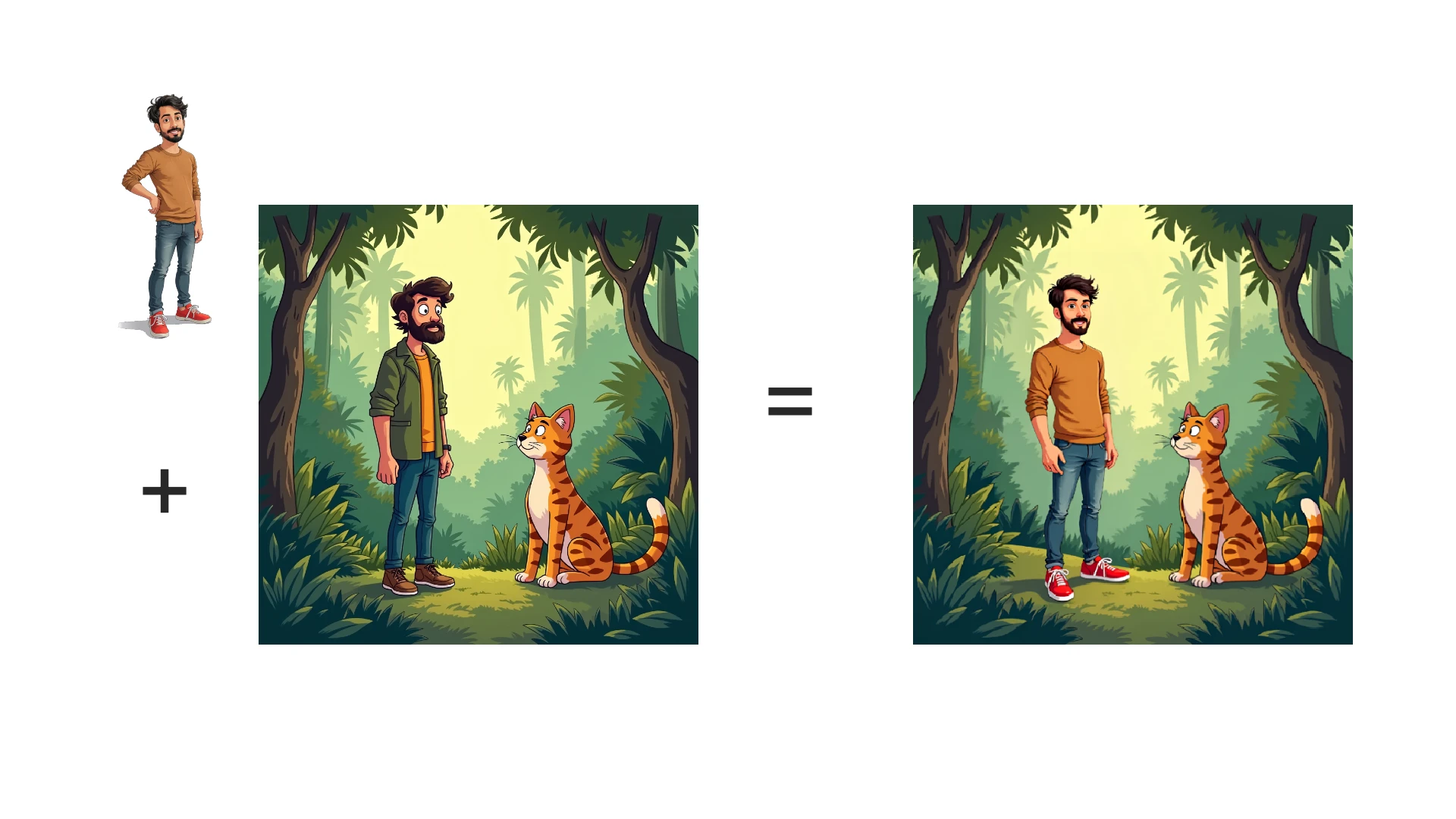
To address this, we use the Oye-Cartoon variation model as a reference-based inpainting tool. In essence, we swap cartoon characters after creating a draft scene.
The process is straightforward:
For a step-by-step visual guide, watch the tutorial below:
- Open the "Oye-Cartoon: Character Swap" tool from the Generate tab in the dashboard.
- Upload the scene, which will open in an editor.
- Upload the cartoon reference image and describe the cartoon in at most two words (e.g., "a boy," "a dog," "a cat").
- Describe the scene with a simple prompt focused on the character to be replaced, such as: "A cartoon boy character in a jungle."
- Ensure that the prompt includes the words "cartoon" and "character."
- Create a mask around the character in the editor.
- Set the image strength to a low value (around 0.1).
- Click "Generate." The process may take approximately 1-4 minutes to complete.